‘Opportunity’ v ‘extra work’ –perspectives of a new PI.

Last week I spotted two tweets about opportunities. One said something along the lines of ‘stop telling PhD students you are giving us opportunities when really you’re dumping extra work on us’ and another implied ‘opportunity’ in a euphemism for unpaid labour.

I have to admit, both of these lead me to take a good hard look in the mirror!

Genuine opportunities for early career researchers are something I have always considered to be critically important in academia. Because of this, over the last few years I have consciously tried to offer PhD, MSc and BSc students what I saw as ‘opportunities’, in particular the chance to get their names on my papers.

This is something that is really important to me. I wasn’t lucky enough to get my name on other people’s papers when I was a student (except for one review!) and I would have killed for the chance to run a few PCRs or analyse some data to get an authorship. For me, this didn’t happen until I was 3+ years post PhD, at which point I had enough of my own first author papers that a co-authorship was less of a boost to my CV than it would have been earlier on.

As an undergrad or postgrad, if you’re hoping to become a PI one day, you already know that publications are key. But without the resources, funding, political sway or niche expertise that a more experienced researcher might have, you’re somewhat reliant upon others going out of their way to include you. Or at least that’s how I felt when it was me.

This is the reason I have made sure to include the students around me over the last few years, and as far as I was concerned – it was working! Recently three of my project students have gotten their names on two papers each, as well as a couple of the nearby PhD students getting their names on almost everything I publish. I must admit I’ve been giving myself a pat on the back for this… Sharing my modest success and building the CVs of the talented future PIs around me had felt like a privilege, and a rewarding endeavour.

But was I really just exploiting them?

Let's Get Together To Talk About This Exciting New "Opportunity" - Dr. Evil  Air Quotes | Meme Generator

Looking back, some of those students probably had no interest in building their CV towards a career in academia, and could probably take or leave the ‘opportunity’ to get their name on a paper. They of course each told me that they really wanted the authorships and were really grateful for them. But that’s exactly what I would have said too, regardless of how I felt – maybe they were just being polite!

With one student in particular, I remember getting a sense that perhaps they weren’t that interested in the ‘opportunity’ I had offered. It was someone I knew well, and I was comfortable being candid with them about this. I recall saying directly that there was no pressure to take it on, that I was happy to do it myself and the only reason I was offering it to them was to give them a chance at authorship. They insisted that they were keen to be involved, and went ahead and did the work, which amounted to a full figure and prominent authorship in the resulting paper. It was only afterwards that they admitted they actually had no interest in that particular topic, it was just extra work, and they had only done it as a favour for me.

I won’t lie, it felt like a bit of a gut punch. My ‘good deed’ had been perceived as unpaid labour.

Outside of academia, unpaid labour can be a huge problem, particularly now that social media has become so key in growing people’s businesses & careers. Stories of professional photographers or bakers getting asked to do weddings in exchange for Instagram posts, or artists being asked to create commissions for nothing but the offer of ‘great exposure’ are rampant, with some notable and entertaining examples on the ‘choosing beggars’ subreddit if you want a laugh: https://www.reddit.com/r/ChoosingBeggars/comments/gfkhqv/background_dancer_gets_an_offer_from_a_music/

Could this be the case with students in academia? Is authorship payment enough, or should we only offer to get students involved if we can actually pay them cold hard cash for the experiments they run or analyse? This would certainly vastly reduce the frequency with which I could give students authorships on my papers, as funds are generally not available to pay them with.

Is it enough to frankly say to a student ‘I have no funding to pay you to run X experiment, and you don’t have to do it, but if you do, I will put your name on the paper’, or does that run the risk of them going along with it out of politeness, as happened to me recently?

If I were to stop offering these ‘opportunities’, would keen students who want to be PIs one day end up missing out? Students who would have been just as excited as me to get their name on a paper?

How do we determine whether we’re offering someone an opportunity or purely exploiting them?

I wish I had the answer to this, but as with many other things in my first year of being a member of faculty – I have no idea.

Discussion, comments & advice welcome as always!

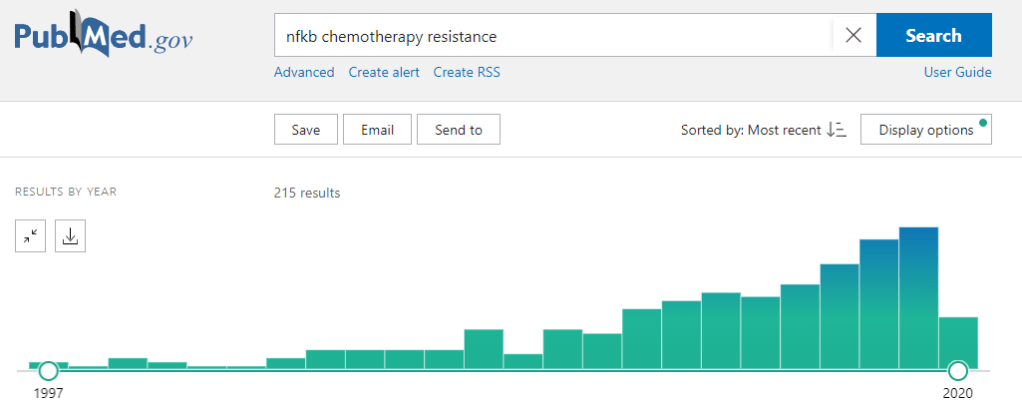
What role does NFkB play in chemoresistance?

This was one of the very first research questions I ever set out to answer, way back as a final year undergraduate in Trinity College Dublin, in 2010/2011.

Since then, over many years, a few papers, and with an ever expanding global team, it has remained at least a side project (and in some cases a driving interest) for some of my oldest friends in research!

For me, it began with my final year thesis project, which involved comparing a panel chemosensitive and chemoresistant lung cancer cell lines, developed by Dr Martin Barr as a tool to investigate response to chemotherapy.

We wanted to understand how lung tumours develop resistance to chemotherapy over time, so that we could find better ways to treat them!

We screened the cell lines using qPCR arrays, and identified a few potential genes of interest including NFKBIA, which is involved in regulating NFkB.

NFkB is a well studied transcription factor that seems to play a flexible and complex role in many biological processes.

This initial finding caught the eye of my project supervisor Dr Kathy Gately, who immediately began to wonder if NFkB could be a potential therapeutic target in chemoresistant lung cancer. The project ended up winning the Margaret Ciotti medal as the highest marked thesis in the School, and with the excitement of a new finding (and this early recognition boosting my confidence), it was an easy decision to stick around in Dr Gately’s lab to begin my PhD.

While the PhD project itself was focused more upstream on PI3K/AKT/mTOR, we did further develop our NFkB finding, and it ended up becoming both my first research paper and the first chapter of my PhD thesis. In this work, we used a drug called DHMEQ, which is an inhibitor of NFkB translocation developed by a Japanese collaborator, and we found that it was more effective in treating chemoresistant lung cells than chemosensitive ones.

I have fond memories of this work, as I got to try out a range of new molecular techniques for the first time, including the obligatory ones like cell culture, drug treatments, qPCR and Western blotting, but also things like high content immunofluorescence imaging, proliferation and apoptosis assays, and I even got to run some Sanger sequencing on a machine named ‘Spongebob’!

https://www.tandfonline.com/doi/pdf/10.4161/cbt.29841

It was clear from the data that this work opened up a whole range of possibilities, and it was time to expand. My colleagues Peter Godwin and Dr Anne-Marie Baird each took aspects of this forward, with Peter publishing a great review on the topic that remains the most highly cited paper on my Google Scholar profile (thanks Peter!) and Anne-Marie being awarded a fellowship from the International Association for the Study of Lung Cancer to investigate a new take on the work down in Brisbane, Australia.

https://www.frontiersin.org/articles/10.3389/fonc.2013.00120/full

Anne-Marie’s work (alongside Dr Sarah-Louise Ryan) brought a fresh and exciting angle, interrogating the role of inflammatory pathways in NFkB mediated cisplatin resistance, as well as confirming that the NFkB translocation inhibitor wasn’t just more effective in chemoresistant cells, but in fact could be used to resensitise those cells to the effects of the chemotherapy itself.

https://www.sciencedirect.com/science/article/pii/S016950021930529X

So where are we now?

Well, we’re certainly not the only ones investigating NFkB in chemoresistance…

With groups all over the world also teasing out the role that NFkB is playing in this setting, things are becoming increasingly clear, and also increasingly complex.

It turns out NFkB is quite a promiscuous player in cancer development and aggresivity!

With seemingly endless feedback loops, regulation and cross-talk with other pathways, it seems to have the capacity to drive wide ranging and even opposing phenotypes. Equally, it often appears to be a mere passenger, caught up in attempts at cell survival during times of stress.

With these flexible abilities, can we truly say that NFkB itself is a viable target for drug development?

Sadly, probably not.

But we do hope that our growing understanding of the role that it plays in chemoresistance will help us to identify better targets that work alongside it, and ultimately better ways to treat these tumours.

As ever, we keep searching.

Big thanks to Kathy, Anne-Marie, Martin, Peter and Sarah-Louise, as well as all the other researchers involved in these projects!

Can cancer research be done from home?

Naturally, when the COVID-19 lockdowns began, our laboratory based research had to take a pause, and we had to stay at home.

Is it possible to work from home as a scientist?

Yes!

I made this video a couple of weeks into lockdown, where I explained that there is still plenty of science that can be done without a lab. I also promised to check in later with how things went, so I’ll do that here now!

It’s now about five months later, and things have largely stayed the same…

Pubs and restaurants have reopened but I haven’t ventured into one just yet. I’m still going out for walks, and almost always wearing a mask, even in open spaces (except during the occasional isolated picnic!)

A few weeks ago, our labs began to reopen, but at very limited capacity. I haven’t been back yet – I am leaving the space to those that need it most – the final year PhD students!

I have repeatedly found myself thanking my lucky stars that I am not trying to finish a PhD this year. For those of you that are, I am thinking of you, and if there is any way that I can help you, please let me know!

I have been busy preparing for the upcoming semester, when I’ll be delivering teaching online to our undergraduate and postgraduate students. Being a module lead is a new experience for me, so leading not one, not two, but THREE modules and adapting them for online learning is going to be quite a challenge! I am so lucky that the rest of our teaching staff have been so accommodating and helpful in showing me the ropes. I hope the students enjoy my modules…

Research still ticks along, with some data getting analysed, some thesis projects getting written up, and some papers getting published, but still no laboratory work.

My current plan is to focus on honing my teaching skills, writing and project planning this semester, and then if all goes well, get stuck back into some lab work in the new year, hopefully with some new students alongside me!

Time will tell whether this goes to plan or not!

Are the PIM kinases promising targets in prostate cancer?

We recently published a review on this topic, and we’ll soon have our first data out investigating this in the lab too!

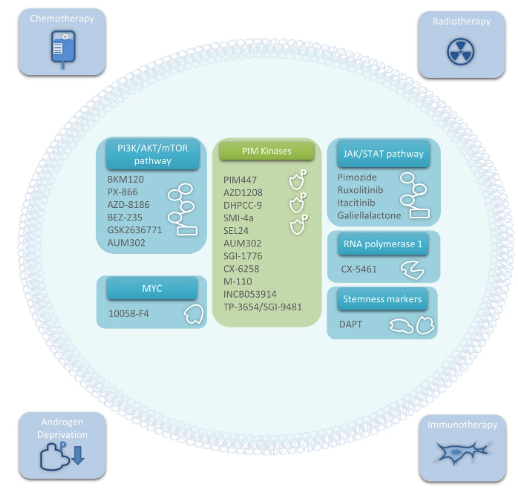
There are a few drugs that target PIM kinases, that have been investigated pre-clinically, or in early stage clinical trials. PIM kinases do seem like promising targets in prostate cancer – they are proto-oncogenes, they seem to be expressed more often in prostate cancer tissue than benign tissue, and perhaps also associate with particularly aggressive disease. But sadly the drugs available to date haven’t skyrocketed through trials to approval and use in the clinic. This is partly due to the drugs themselves (maybe the next generation of drugs will be better, we hope) but we also suspect it might be a better strategy to co-target PIM with other interconnected pathways, using combinations of drugs, or even individual multi-targeted drugs.

In our review, we summarized some of the drugs available to carry out research on, that directly target PIM, as well as ones that we think could be used in combination with PIM inhibition:

https://www.nature.com/articles/s41392-020-0109-y

I was also involved in another review which took an in depth look at the role of PIM in resistance to other treatments and in immune evasion, across various cancer types.

https://www.sciencedirect.com/science/article/pii/S0163725819302062

Overall, yes we think PIM is a promising target in prostate cancer as well as other cancers, and we suspect it will be best targeted as part of a combination therapy approach, and perhaps in the resistance setting.

How much does cancer research cost?

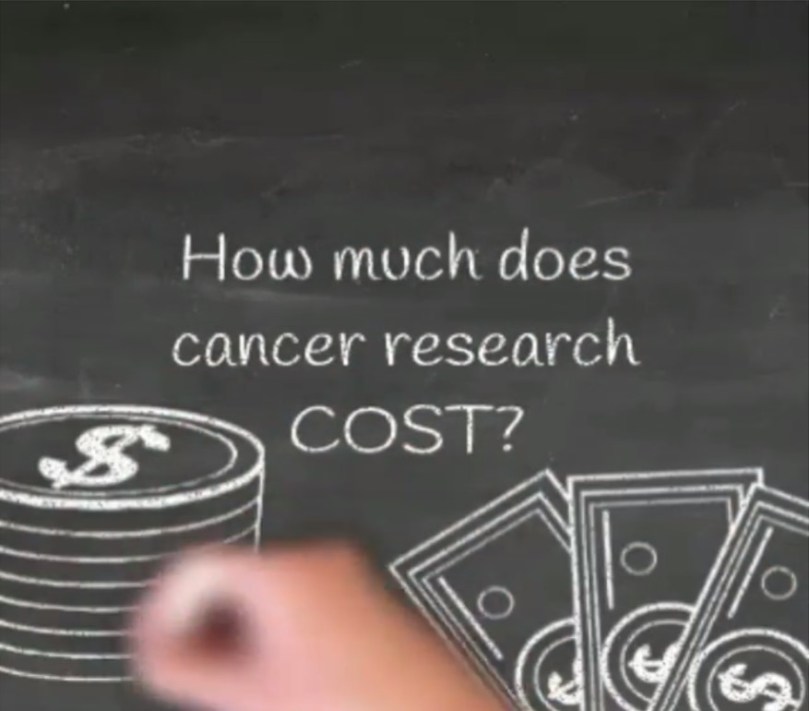
Times are strange due to #Covid19 – so we’re coming to you not from our lab, but on a virtual blackboard instead, from home! This video aims to give a whistle-stop tour of the costs involved in carrying out cancer research. We get asked about this a lot – so we’re here to show you where those valuable funds raised in pub quizzes, sponsored walks & raffles all go! Do you have a guess at how much it costs to carry out a full PhD? Watch the video to find out!

Hello world!

After adamantly refusing to blog for a very long time… it’s time to give in.

Let me introduce myself. I’m Susan. I’m a cancer researcher. My passion is understanding how to exploit vulnerabilities within tumours so that we can find better ways to treat the disease.

Over the last 13 years I’ve been developing my skills, learning more and more about cancer, and working towards the ultimate goal of starting my own research lab.

Now, it is finally happening!

As I work towards building ‘Heavey Lab’ in University College London, where I’ve recently been appointed as a Lecturer in Translational Medicine, I’ll endeavor to pop in now and then, chronicling each of the ‘firsts’ that come along with being a brand new member of faculty.

I’ve enjoyed communicating my research over the years, both online and in the real world, so that cancer patients, advocates, carers and students alike can get a taste of what the world of cancer research is really like. A lot of this #scicomm activity has been through Cancer Research Demystified, which I co-founded and run. I’ll share some of the material that we created for CRD here too, with brief introductions on why we wanted to share these aspects of our work with the world.

I’ll also share our publications, along with plain English explanations of what we found, why it was interesting to us, and with the benefit of hindsight – what happened next.

That’s all for now.

Stay curious!